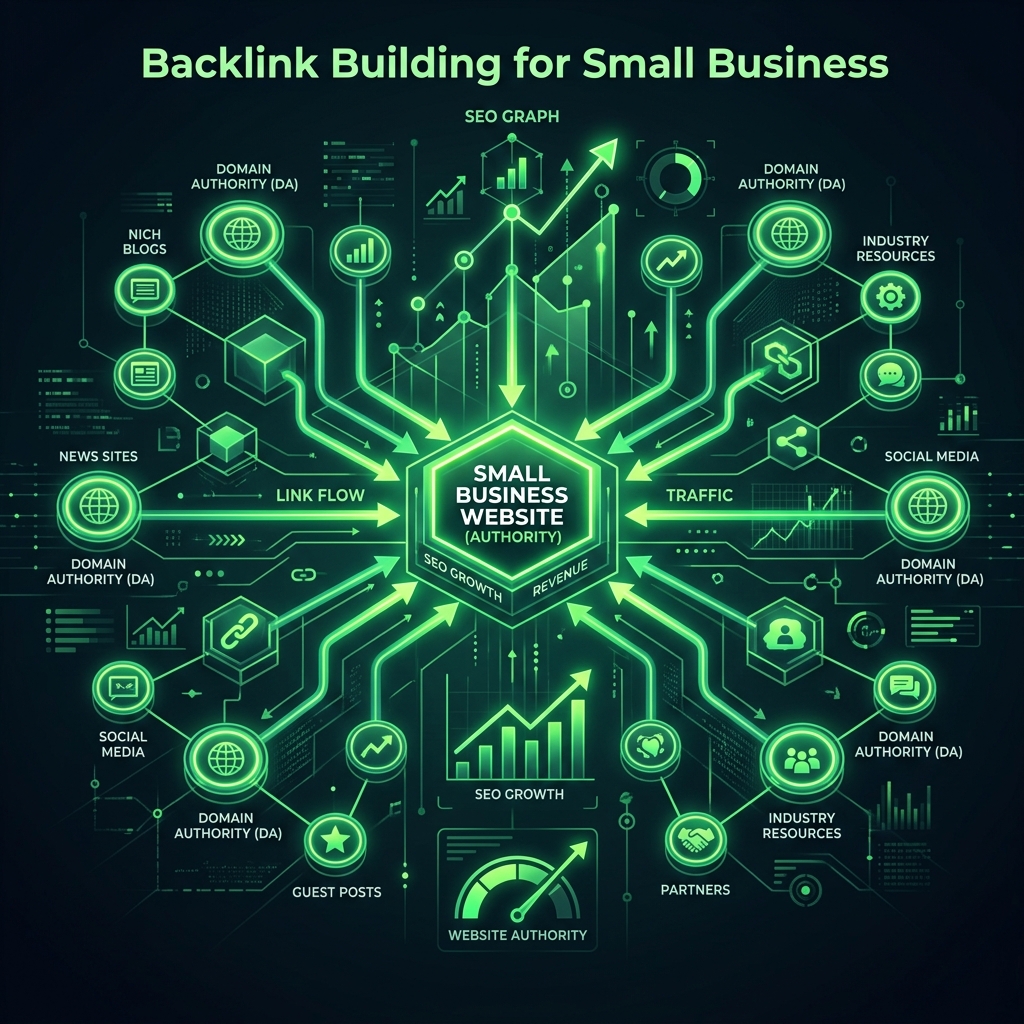
What are Backlinks and Why They Still Matter
A backlink is a recommendation from one site to another. Google considers each link a vote.
According to Moz, backlinks remain the #1 ranking factor alongside content. For a small business, this is an opportunity to compete with large brands.
1. Competitor Backlink Analysis (Zero Budget)
The first step is to understand where competitors get their links. Tools:
- Ahrefs / Semrush — paid, but have free trials.
- Linkody / SEO SpyGlass — cheaper alternatives.
- Google Search Console — your own links, for free.
- Manual check: type `site:competitor.com` in Google.
Find 3–5 sources that give competitors strong links and copy their strategy.
2. 7 Methods to Get Links on a Zero Budget
2.1 Digital PR: Expert Comments in the Media
Local media platforms are constantly looking for experts to comment. Write to editors: "I am a web design expert, ready to comment on trends".
2.2 "Top 10" Lists: Niche Rankings
Create a list like "Top 10 Home Repair Companies in Your City" and invite each to be included. Most reply and link back to your site.
2.3 Local Business Directories
Google Business Profile (mandatory!), local directories like Yelp or Yellow Pages. These links are trusted more than random blogs.
2.4 Guest Posting on Niche Blogs
Find blogs that publish guest articles. Write to the editor: "I can write an article about [topic] for free with a link to my site".
2.5 HARO Alternatives
HARO (Help a Reporter Out) is closing, but alternatives exist: Connectively, Qwoted, and Facebook groups. Register and respond.
2.6 Partnerships and Resource Exchanges
Replace "link exchange" with "joint webinar/case/interview". Two sites publish content and link to each other — it's legal and works.
2.7. Creating Viral Content
Research, infographics, calculators. If the content is useful, people write about it and link naturally. For example: "Home repair cost calculator".
The first 10 quality links take 2–3 months. Then it speeds up. Start with 2–3 methods, not all at once.
3. Toxic Links: How Not to Break Your Site
Google penalizes for "artificial" links: PBNs, comment spam, buying links. How to protect yourself:
- Check domain rating. If DA is < 10 and the site is about casinos — avoid.
- Analyze anchor text. If 80% of links have exact anchors like "buy mattress" — it is toxic.
- Google Search Console → Links. Regularly check new domains.
- Disavow tool — if penalized, submit a file with toxic domains.
4. Anchor Text Distribution: Natural, Not Over-optimized
Ideal ratio:
- 70% — branded/URLs ("brand.com", "here", "source")
- 20% — partial ("home repair services", "best mattresses")
- 10% — exact match ("buy mattress in New York")
5. What NOT to Do (Reputation-Costing Mistakes)
- Do not buy links on exchanges. Google detects this fraud.
- Do not use PBNs (Private Blog Networks). High risk of ban.
- Do not spam comments in thousands of blogs. Zero value and high risk.
- Do not exchange links with irrelevant sites. "Car repair" -> "Best cosmetology" = nothing.
Want Google to index your backlinks quickly?
IndexFast automates page indexing via Google Indexing API. Your new links will be indexed in hours, not weeks.
Start for free →Conclusion
Backlink building for a small business is not about millions in budget, but creativity and systematic work. Start with competitor analysis, use 2-3 methods, and track results. To index links fast, use IndexFast.